
09 Mini Cooper S No start with crank
- Bchez71
-
 Topic Author
- Offline
- New Member
-

- Posts: 5
- Thank you received: 0
Please Log in or Create an account to join the conversation.
- Chad
-

- Offline
- Moderator
-

- I am not a parts changer.
- Posts: 2208
- Thank you received: 742
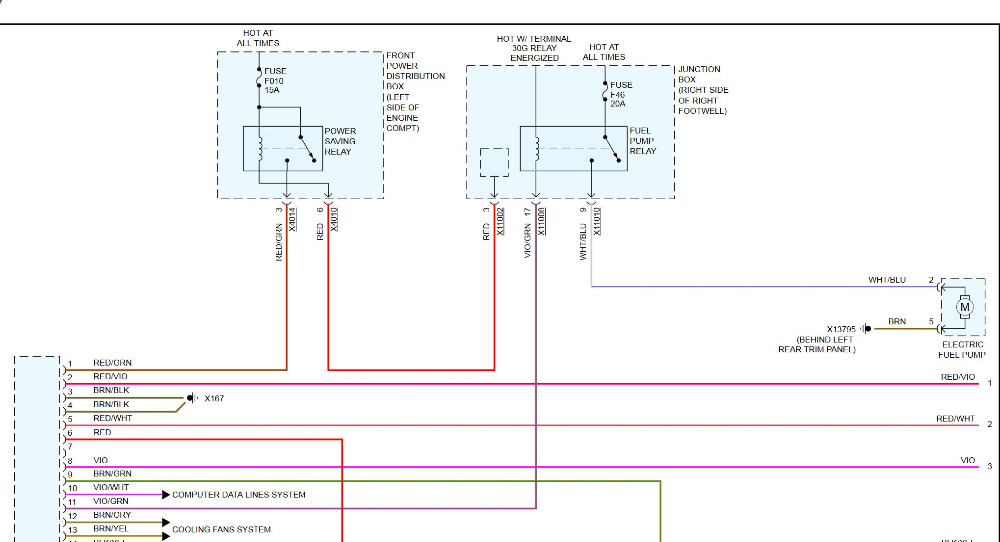
Bchez71 wrote: I checked voltage while cranking the engine I see battery voltage.
At what location was this check made? At the fuel pump?
"Knowledge is a weapon. Arm yourself, well, before going to do battle."
"Understanding a question is half an answer."
I have learned more by being wrong, than I have by being right.

Please Log in or Create an account to join the conversation.
- Bchez71
-
Topic Author
- Offline
- New Member
-
- Posts: 5
- Thank you received: 0
Please Log in or Create an account to join the conversation.
- Chad
-
- Offline
- Moderator
-
- I am not a parts changer.
- Posts: 2208
- Thank you received: 742
1. The pump does NOT get power, and does NOT run for a couple seconds of prime when the key is turned to the "ON" position.
2. If you give power to the WHT/BLU wire with a power probe, the pump runs.
3. Cranking the engine, you have power on the WHT/BLU wire, and a good ground on the BRN wire but, the pump does not run.
Is this correct?
"Knowledge is a weapon. Arm yourself, well, before going to do battle."
"Understanding a question is half an answer."
I have learned more by being wrong, than I have by being right.
Please Log in or Create an account to join the conversation.
- Bchez71
-
Topic Author
- Offline
- New Member
-
- Posts: 5
- Thank you received: 0
Please Log in or Create an account to join the conversation.
- Chad
-
- Offline
- Moderator
-
- I am not a parts changer.
- Posts: 2208
- Thank you received: 742
I am curious of the voltage on BOTH wires.
With the connector connected, engine cranking,...What voltage do you read on the WHT/BLU wire? What voltage do you read on the BRN wire, while cranking?
"Knowledge is a weapon. Arm yourself, well, before going to do battle."
"Understanding a question is half an answer."
I have learned more by being wrong, than I have by being right.
Please Log in or Create an account to join the conversation.
- cheryl hartkorn
-
- Offline
- Platinum Member
-

- Posts: 694
- Thank you received: 130
Please Log in or Create an account to join the conversation.
- Bchez71
-
Topic Author
- Offline
- New Member
-
- Posts: 5
- Thank you received: 0
Please Log in or Create an account to join the conversation.
- Chad
-
- Offline
- Moderator
-
- I am not a parts changer.
- Posts: 2208
- Thank you received: 742
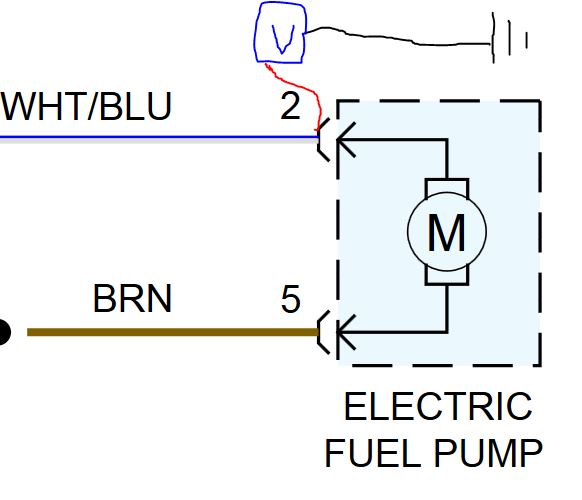
Then, back-probe the power side of the fuel pump connector (WHT/BLU) with the positive lead of the meter. CRANK the engine and read the voltage.
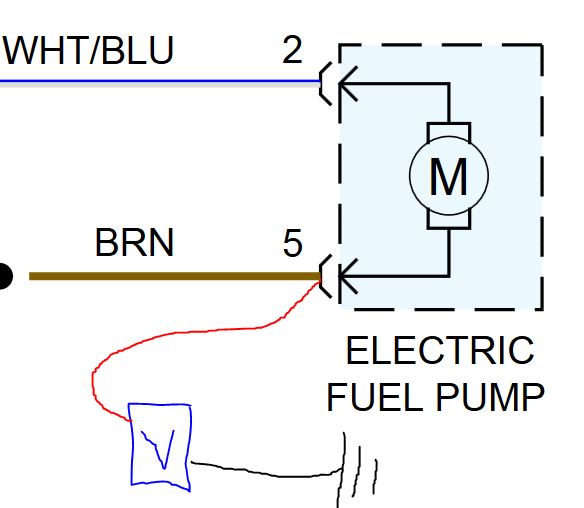
Now, move the Back-Probe/positive test-lead to the GROUND side (BRN) of the fuel pump connector, leaving the negative test-lead connected to a good ground. CRANK the engine and read the voltage.
"Knowledge is a weapon. Arm yourself, well, before going to do battle."
"Understanding a question is half an answer."
I have learned more by being wrong, than I have by being right.
Please Log in or Create an account to join the conversation.
- Chad
-
- Offline
- Moderator
-
- I am not a parts changer.
- Posts: 2208
- Thank you received: 742
"Knowledge is a weapon. Arm yourself, well, before going to do battle."
"Understanding a question is half an answer."
I have learned more by being wrong, than I have by being right.
Please Log in or Create an account to join the conversation.
- Bchez71
-
Topic Author
- Offline
- New Member
-
- Posts: 5
- Thank you received: 0
Please Log in or Create an account to join the conversation.
- Chad
-
- Offline
- Moderator
-
- I am not a parts changer.
- Posts: 2208
- Thank you received: 742
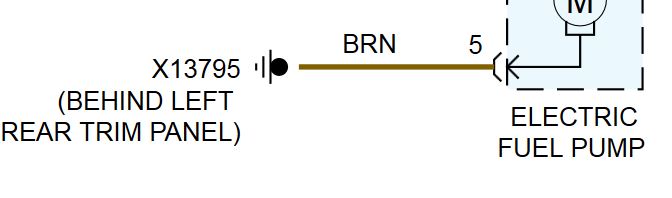
You can use a jumper wire (or PowerProbe) to provide a temporary GOOD ground for testing purposes to confirm.
"Knowledge is a weapon. Arm yourself, well, before going to do battle."
"Understanding a question is half an answer."
I have learned more by being wrong, than I have by being right.
Please Log in or Create an account to join the conversation.
- SamM
-
- Offline
- Junior Member
-

- Posts: 23
- Thank you received: 3
Please Log in or Create an account to join the conversation.
- Ful4ce
-
- Offline
- New Member
-
- Posts: 1
- Thank you received: 0
Please Log in or Create an account to join the conversation.